The Aircraft and the Journey
On June 1, 2009, Air France Flight 447 departed Rio de Janeiro’s Galeão International Airport bound for Paris. The aircraft was an Airbus A330-203, a modern wide-body jet considered one of the safest aircraft in commercial aviation. Aboard were 216 passengers and 12 crew members—228 people in total.
The flight was routine. For the first three and a half hours, the aircraft cruised at 35,000 feet with the autopilot engaged, handling the navigation across the Atlantic. Captain Marc Dubois, an experienced pilot with 10,988 flight hours, was on scheduled rest. The flight was being managed by two co-pilots: Pierre-Cédric Bonin, with 2,988 hours of experience, and David Robert, with 4,479 hours.
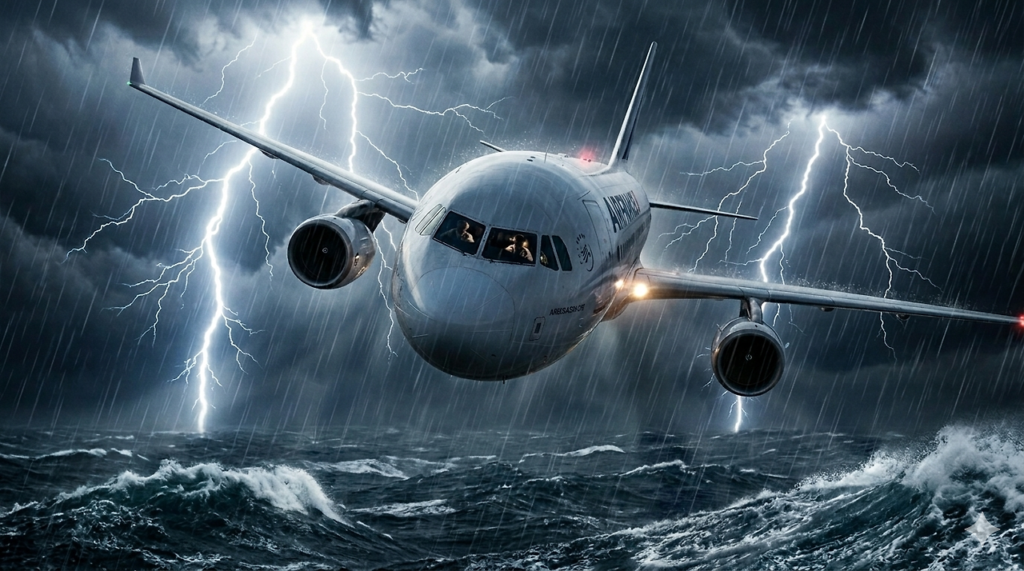
The weather radar ahead showed a line of powerful convective storms. This was not unusual for this route. The aircraft was equipped to penetrate such weather. Standard procedure called for navigating around the most severe cells while accepting that some turbulence was unavoidable.
The Cascade Begins: 2:10 AM
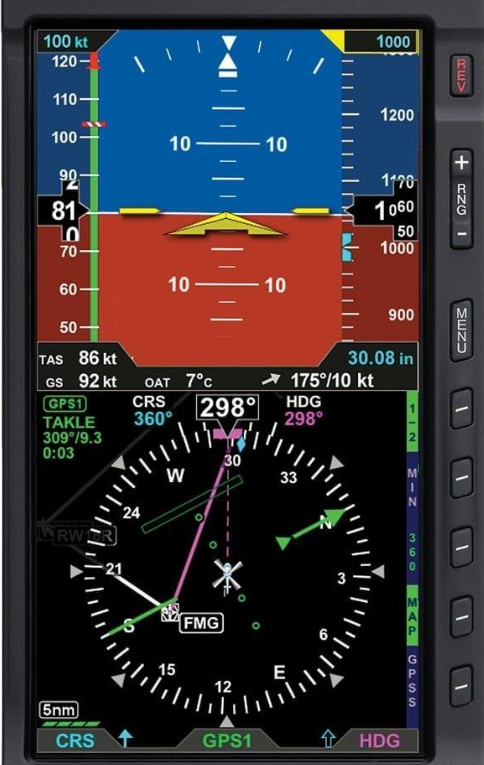
At approximately 2:10 AM UTC, the aircraft’s three air data inertial reference units (ADIRUs) began registering inconsistent airspeed data. The root cause was icing. The three pitot probes—sensor tubes on the aircraft’s exterior that measure airspeed by detecting ram air pressure—had accumulated ice crystals in the high-altitude convection. Two of the three probes stopped functioning.
With conflicting airspeed information flooding the flight management computer, the autopilot did what it was designed to do: it disconnected. The aircraft transitioned from fully automated flight to Alternate Law—a less-protected mode requiring manual crew intervention. The autopilot disengaged. The auto-thrust system also shut down.
Within seconds, the flight control law automatically demoted from “Normal Law” to “Alternate Law.” In Alternate Law, the aircraft provides less protection against stall. The pilots now had greater control authority but also greater responsibility.
At 2:10:16 AM, an alarm sounded. The flight data recorder captured the words: “Airspeed unreliable.”
The two co-pilots were now responsible for manually controlling an aircraft traveling at 500+ miles per hour (800 km/h) at 35,000 feet in turbulent weather, with false or missing airspeed data, and with conflicting warning signals flooding the cockpit.
The First Critical Misunderstanding
Co-pilot Bonin interpreted the loss of airspeed data and the brief appearance of descent rate information as an indication that the aircraft was descending. By the logic of conventional flying: if the plane is descending, you need to pull back on the stick to arrest the descent and climb back to altitude.
Bonin began pulling back on his sidestick control.
This was the critical error. At high altitude, with the engines operating at cruise power, pulling back on the control stick increases the pitch angle, which reduces airspeed and increases the risk of stall. The correct procedure—which both pilots should have known from training—is the opposite: push forward to maintain or increase airspeed, then gradually climb back to the desired altitude once airspeed is recovered.
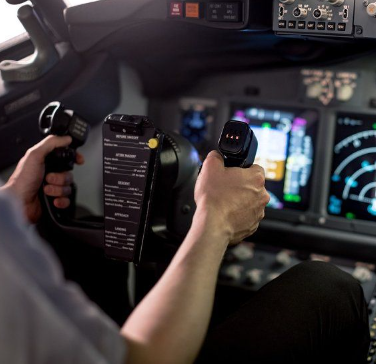
Co-pilot Robert, at the same time, made contrary inputs. He pushed forward on his sidestick, attempting to maintain airspeed and pitch control.
Here, the aircraft’s control law design became critical. The Airbus A330’s sidesticks do not move together like Boeing’s control wheels. Each pilot has an independent sidestick. When two pilots provide conflicting inputs, the control law on the A330 is designed to average the inputs or, in some modes, to give priority to whichever pilot has explicitly activated the “takeover” button.
In this case, neither pilot had engaged the takeover button. What happened was that Robert’s forward input (correct) and Bonin’s backward input (incorrect) partially canceled each other out. The result was that the aircraft’s response was diluted—neither pilot could fully see the consequences of their own actions because the other pilot’s contradictory input was being averaged in.
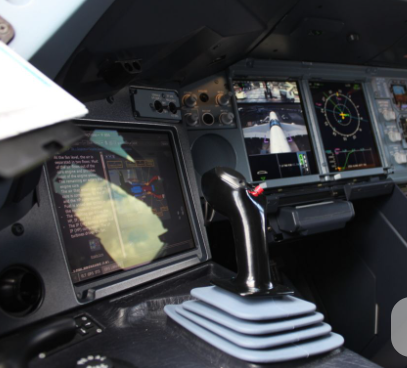
Critically, the sidesticks provided no haptic feedback to indicate what the other pilot was doing. On a Boeing aircraft with mechanically linked controls, when one pilot pulls back, the other pilot’s control yoke also moves back—he feels it immediately. On the Airbus A330, if your co-pilot is pulling back, you have no physical sensation of it. Your stick remains light and responsive in your hand, unaware of the conflict.
This absence of tactile communication between the two pilots—what aviation engineers call “haptic feedback”—meant that Bonin had no physical way of knowing that Robert was fighting against him.
The Stall Deepens
As the minutes passed—just over four minutes total from the initial pitot failure to impact—the aircraft’s pitch angle gradually increased. The nose climbed higher and higher: 10 degrees, 15 degrees, 20 degrees, 27 degrees, 30 degrees, 35 degrees.
The airspeed, without ram air pressure to measure or with contaminated sensor data, became increasingly unreliable. The flight data recorders showed confusion compounding confusion. The flight directors—automation that usually guides the pilot—were themselves confused, offering guidance based on invalid airspeed data.
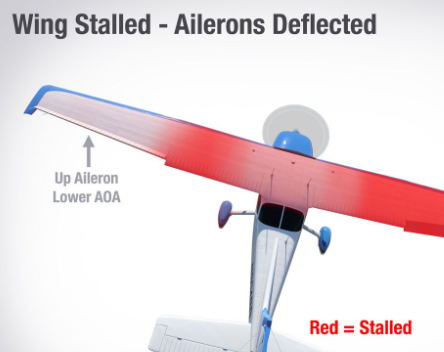
Warning systems activated, but in the chaos, their specific messages were either missed or misinterpreted. The cockpit voice recorder captured Bonin saying: “What’s happening?”
At 35 degrees pitch angle, the aircraft was in a full aerodynamic stall. The wings were no longer generating enough lift to sustain level flight. The aircraft was, in essence, falling out of the sky.
The correct recovery procedure for a stall at high altitude is unambiguous: reduce the pitch angle immediately by pushing forward on the control stick to increase airspeed, then gradually climb back to altitude once safe airspeed is restored. This maneuver would have taken perhaps 10-15 seconds.
Bonin never pushed forward. Throughout the entire stall event—lasting several minutes—the flight data showed he was either holding the stick back or continuing to pull it backward. Meanwhile, Robert’s forward inputs had diminished or ceased.
At 2:14:28 AM, the aircraft struck the Atlantic Ocean at high vertical speed. The nose was pitched at 16.2 degrees nose-down (the pitch attitude at impact indicated the aircraft had rotated back somewhat from the maximum pitch angle earlier in the descent). All 228 people aboard were killed instantly by blunt force trauma.
It took two years to recover the aircraft wreckage and the flight data recorders from the ocean floor, nearly two miles down.
What the Investigation Revealed
The French accident investigation agency, the Bureau d’Enquêtes et d’Analyses (BEA), released its final report in July 2012. The investigation revealed not a single-point failure, but a convergence of multiple factors:
First, the pitot probe icing. The aircraft had been operating on the European Aviation Safety Agency’s (EASA) recommended replacement schedule for these probes, but Air France had not yet replaced them. The Thales AA pitot probes in use were known to ice in certain conditions. After the accident, Air France immediately replaced all of them fleet-wide.
Second, inadequate training. The two co-pilots had never received high-altitude manual flying training with unreliable airspeed data in a stall scenario. Their simulator training had not included the specific combination of failures they encountered. When the training exists, it is typically conducted at lower altitudes where recovery is more straightforward. Bonin, the pilot flying during the crisis, had less experience with high-altitude manual flying than many pilots.
Third, the control law design and lack of feedback. While BEA did not blame the sidestick design as the single cause, the investigation confirmed that the absence of haptic feedback between the two pilots contributed to the loss of situational awareness. Neither pilot fully understood what the other was doing with the controls. This ambiguity persisted throughout the event.
Fourth, the warning system. Multiple alarms sounded—over 200 separate warnings in the final four minutes of flight. But many of these alarms were not explicit about what the problem was. “Airspeed unreliable” is not the same as “You are in a stall, push forward.” The flight directors continued offering confusing guidance based on invalid data. The cockpit voice recorder showed the pilots discussing which alarms to believe and which to ignore, buying time they did not have.
Finally, the crew’s failure to recognize the stall. Even when evidence mounted that the aircraft was in a stall condition—sustained high pitch angle, inability to increase speed, high descent rate—neither pilot explicitly diagnosed a stall or took the corresponding recovery action. The BEA’s final conclusion was stark: “The crew never understood that they were stalling and consequently never applied a recovery maneuver.”
Changes in Cockpit Design and Pilot Training
The accident prompted a comprehensive review of cockpit design principles and pilot training worldwide.
Improvements to sidestick design. Modern aircraft manufacturers began incorporating more sophisticated haptic feedback systems into their sidestick controls. Instead of leaving pilots with no sensation of competing control inputs, newer designs allow pilots to feel a resistance or vibration when the other pilot is manipulating the controls. This provides immediate tactile information about conflicts or shared control.
Enhanced high-altitude stall training. Airlines and training organizations revised their pilot training programs to include more realistic high-altitude manual flying scenarios, specifically addressing the challenge of flying without reliable airspeed data. Training now includes the explicit recognition of stall symptoms beyond just airspeed information.
Warning system redesign. Aircraft manufacturers worked to make warning messages more specific and prioritized. Instead of a cascading wall of warnings, systems now focus on the most critical messages first and present them in language that drives immediate action. “Stall, push nose down” is more actionable than “Airspeed unreliable.”
Monitoring and automation policy. The accident highlighted the dangers of complete reliance on automation and the risks of manual flight in degraded modes. New protocols emphasize cross-checking, explicit communication between pilots when one takes control or detects a conflict, and prioritization of the most direct instrument indications (such as angle of attack) over airspeed when airspeed sensors are suspect.
Pitot probe improvements. Across the aviation industry, aircraft operators replaced older pitot designs with more robust, heated, and redundant systems. The thimble-design Thales AA probes that failed on AF447 were replaced with newer designs across hundreds of aircraft.
A Question of What Information Means
The tragedy of Air France 447 was not simply a failure of equipment. It was a failure of information—or more precisely, the absence of information at the moment it was needed most.
The aircraft had altimeter information (altitude), heading information, attitude information (pitch and roll), and even angle-of-attack information (which would have revealed the stall more explicitly than airspeed). Yet because the airspeed data was unreliable, and because the pilots had never trained for this specific scenario, they could not piece together the correct interpretation: they were stalling.
The sidestick design, with its independence and lack of feedback between pilots, meant that the two men in the cockpit were flying partially blind to each other’s intentions. Each could see the instruments, but neither could feel the other’s hand on the control, nor the aircraft’s response to their combined—and conflicting—inputs.
In traditional cable-and-pulley aircraft, or in modern Boeing aircraft where control inputs are mechanically linked, the physical connection provides information. A pilot pulling back on the yoke feels the resistance of the air load. When the co-pilot pulls in the opposite direction, the pilot feels that fight immediately through the control column. This haptic feedback is information.
The Airbus design prioritized the independence of crew actions and the safety of not allowing one pilot’s inadvertent input to override the other. But in doing so, it eliminated a channel of information that had served aviation for decades: the feel of the aircraft in your hands.
Legacy and Lessons
Air France Flight 447 remains one of the most studied aviation accidents. Nearly 14 years after the crash, in 2022, Air France and Airbus faced a trial in Paris on charges of involuntary manslaughter. A French court acquitted both organizations of criminal charges, though the verdict did not satisfy the families of the victims who attended the proceedings.
What is unambiguous is this: the accident was not inevitable. With different training, with different crew actions, or with different design choices regarding cockpit information and feedback systems, the aircraft could have been recovered. The official investigation concluded that recovery was possible during at least some phase of the descent, if the correct actions had been taken.
Modern aircraft are safer in part because of what was learned from AF447. Cockpit design has evolved. Pilot training has evolved. The understanding of what information pilots need—and how that information should be conveyed, whether visually, through sound, or through touch—has evolved.
The loss of 228 lives drove changes that have prevented countless deaths in the aviation system that followed. It is a grim exchange, but it is the nature of aviation safety: we learn through tragedy, and we build safeguards from the evidence of failure.
Sources: BEA (Bureau d’Enquêtes et d’Analyses) Final Investigation Report, July 2012; Cockpit Voice Recorder and Flight Data Recorder analysis; NTSB records; academic research on haptic feedback in aviation; airline training protocols; Airbus A330 design specifications and control law documentation.
Official Report: BEA final report available at https://www.bea.aero/ (in French and English)
Leave a Reply