
Aviation Safety: Risk Mitigation Strategies for a Successful Flight [PHAK 2-g]
In any complex activity, risk assessment is the first step. Once you’ve identified the level of risk, the next step is to effectively ‘Mitigate Risk.’ Establishing and executing strategies to actively reduce risks is key to achieving safe outcomes.
Risk management encompasses various frameworks, including Avoidance, Transference, Reduction, and Acceptance. These strategies enable us to prevent potential incidents and make optimal decisions.
example
For example, consider a pilot who needs to fly 50 miles in Marginal Visual Flight Rules (MVFR) conditions. Here are practical ways a pilot can apply risk mitigation: – Wait until the weather improves to Visual Flight Rules (VFR) conditions. – Fly with an instrument-rated pilot. – Postpone or cancel the flight. – Choose an alternative, such as traveling by car.
Beyond just flying, having a concrete action plan to reduce risk is crucial in various situations.
Pilot Readiness Check: The IMSAFE Checklist
An effective way for individual pilots to mitigate risk is by utilizing the IMSAFE checklist. Before a flight, pilots assess their physical and mental readiness, objectively evaluating their capabilities.
- Illness: Illness poses a direct risk to a pilot’s
flight safety. You must check if you are feeling unwell. - Medication: Review any medications you are taking
to ensure they won’t impair your judgment or cause drowsiness. - Stress: Psychological pressures from work,
financial concerns, health issues, or family problems can diminish
concentration and flight performance. While not explicitly regulated,
pilots must consider the impact of stress on their flying. - Alcohol: Check if you have consumed alcohol within
the past 8 or 24 hours. Even small amounts of alcohol can impair flying
skills and increase susceptibility to spatial disorientation and
hypoxia. - Fatigue: Being fatigued from insufficient rest is
arguably the most insidious risk factor in flight safety. Pilots may not
recognize its severity until a serious mistake occurs. - Emotion: An emotionally unstable state can hinder
safe flight operations.

The PAVE Checklist for Risk Recognition and Management
The core of risk mitigation lies in recognizing potential hazards beforehand. The PAVE checklist, when integrated into pre-flight planning, categorizes flight risks into four main areas. It’s a vital tool that helps pilots make effective decisions.
The PAVE checklist guides a systematic review of risk factors before each flight. After identifying risks, you must evaluate whether you can safely manage that risk or combination of risks. If the risk cannot be managed, canceling the flight is the safest decision.
If you decide to proceed with the flight, you must develop specific strategies for risk mitigation. Pilots can control risks by establishing personal minimums for each risk category. Personal minimums refer to a pilot’s unique limits based on their current experience and proficiency.
In this process, understanding the concept of ‘Acceptable Risk’ is crucial. This refers to the degree of potential loss we are willing to tolerate in a given situation. Setting personal minimums helps clarify your acceptable risk level and bridges the gap between legal standards and genuinely safe flight.
For instance, an aircraft flight manual (AFM) might state a maximum crosswind component of 15 knots. However, if a pilot only has experience flying in 10-knot crosswinds, flying in conditions exceeding 10 knots without additional training might be unsafe. The 10-knot crosswind experience level becomes that pilot’s personal limit until they gain more experience in higher crosswind conditions through additional training with a Certified Flight Instructor (CFI).
A safe pilot clearly recognizes the difference between what is “legal” according to regulations and what is “wise or safe” in terms of personal experience and proficiency.

P = Pilot in Command
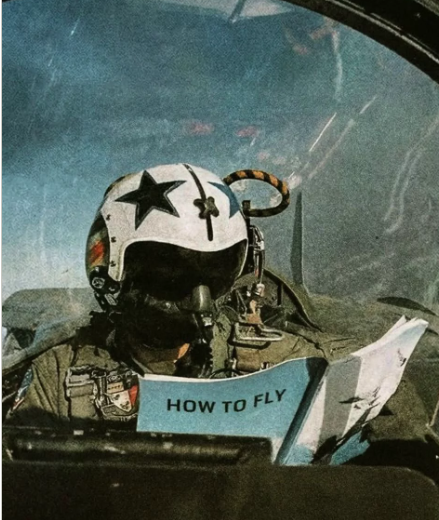
The pilot is one of the key risk factors in flight safety. Pilots must ask themselves about their readiness for the flight. They should evaluate whether their experience, recent flight time, and physical and emotional state are suitable for flying.
The IMSAFE checklist provides a structured way to answer these self-assessment questions.
A = Aircraft
The aircraft can impose significant limitations on a flight. Ask yourself the following questions to assess aircraft-related risks:
- Is this aircraft suitable for this flight?
- Are you familiar with this aircraft, and do you maintain current
flight proficiency in it? Aircraft performance figures are based on new
aircraft flown by expert test pilots. Consider your personal proficiency
alongside the aircraft’s performance. - Does the aircraft have the necessary instruments, lighting, and
appropriate navigation and communication equipment for the flight? - Can you use the available runway with sufficient safety margins
under the flight conditions? - Can this aircraft be operated with the planned load and at the
altitude required for the flight? - Do you have sufficient fuel capacity, including reserves, for the
planned flight segment?
V = Environment
Environmental assessment is an essential part of risk mitigation. Weather, terrain, airports, airspace, and nighttime flying conditions all require careful consideration. Apply decision-making models (DECIDE), crew resource management (CRM), and threat and error management (TEM) concepts to continuously assess and manage risks during the flight.

Weather
Weather is a key element of environmental assessment. Pilots must establish their own personal minimums regarding weather. Consider the following when evaluating weather for a specific flight:
- What are the current cloud ceilings and visibility? In mountainous
terrain, especially if unfamiliar, higher minimums for cloud ceilings
and visibility are necessary. - Always keep in mind the possibility that the actual weather may
differ from the forecast. Have alternative plans and be prepared to
divert in case of unexpected changes. - Consider the wind and crosswind component intensity at the
airport(s) you will be using. - If flying in mountainous terrain, check for strong winds aloft.
Strong winds in mountainous areas can cause severe turbulence and
downdrafts, making flight very dangerous. - Are thunderstorms present or forecast?
- If clouds are present, check for current or forecast icing.
Understand the temperature/dew point spread and the temperature at your
cruising altitude, and determine if you can safely descend through the
entire route. - If you encounter icing conditions, do you have sufficient experience
operating the aircraft’s de-icing or anti-icing equipment? Is the
equipment in good working order, and for what icing conditions is the
aircraft rated?
Terrain
Terrain assessment is another crucial component of flight environment analysis.
- Use altitudes depicted on VFR and IFR charts to avoid terrain and
obstacles, especially during night or low-visibility conditions.
Determine your safe altitude in advance. - Utilize Maximum Elevation Figures (MEF) and other data to minimize
the possibility of collision with terrain or obstacles during
flight.
Airport
- What lighting is available at your destination and alternate
airports? Check if VASI/PAPI or ILS glideslope guidance lights are
present and operational. Pilots may sometimes need to activate airport
lighting via radio. - Always check NOTAMs (Notices to Airmen) for closed runways or
airports. Identify important information such as runway or beacon light
outages, or nearby towers. - Choosing your flight path wisely is critical. The presence of nearby
airports in case of an engine failure becomes extremely important. - Check if your destination or alternate airport has shorter or
obstructed runways.
Airspace
- When flying over remote areas, ensure you have appropriate clothing,
water, and survival equipment on board in case of a forced landing. - If there’s a possibility of losing visual reference to the horizon
when flying over water or uninhabited areas, the flight should be
conducted under Instrument Flight Rules (IFR) or such situations should
be avoided. Mere IFR readiness does not license maintaining flight
conditions. - Check airspace and Temporary Flight Restrictions (TFRs) along your
route.
Nighttime
Nighttime flying demands special consideration and attention.
- When flying at night over water or uninhabited areas where there’s a
possibility of losing visual reference to the horizon, operate under
Instrument Flight Rules (IFR) or avoid such situations. - You must assess whether current flight conditions allow for a safe
emergency landing at night. - Perform a pre-flight check of all aircraft interior and exterior
lights for night flight. It is recommended to carry at least two
flashlights: one for external pre-flight checks, and a smaller, dimmable
one to keep nearby.

E = External Pressures
External pressures are non-flight-related influences that create a sense of urgency to complete a flight, thereby compromising safety. These elements of external pressure include:
- People waiting for the airplane to arrive at the airport.
- Passengers the pilot doesn’t want to disappoint.
- A desire to prove one’s competence as a pilot.
- A desire to impress someone (in aviation, there’s no phrase more
dangerous than “Watch this!”). - A strong urge to achieve specific personal goals (impatience like “I
want to go home” or “I want to arrive quickly”). - The pilot’s general goal-oriented personality.

Risk mitigation goes beyond passive defense. It’s an active process of proactively identifying potential risks, clearly establishing personal minimums, and applying practical mitigation strategies. It’s essential to understand acceptable risk levels and utilize systematic tools such as IMSAFE, PAVE, DECIDE, and CRM/TEM.
This approach enables smarter and safer decisions by continually evaluating individual capabilities and environmental factors. Ultimately, these risk mitigation strategies are indispensable competencies for any true professional in all complex activities, including aviation.
Leave a Reply