
On October 31, 2000, Singapore Airlines Flight 006 (SQ006), a Boeing 747-400, collided with construction equipment during a typhoon-force takeoff at Chiang Kai-shek International Airport (now Taoyuan International Airport) in Taiwan. Out of 179 passengers and crew, 83 tragically lost their lives.
While the primary error was entering the wrong, partially closed runway (Runway 05R) instead of the assigned one (Runway 05L), the National Transportation Safety Board (NTSB) focused heavily on a deeper question: How could three highly experienced, well-trained pilots stare directly at conflicting cockpit automation and still advance the throttles?
Here is the comprehensive breakdown of the SQ006 disaster from the perspective of NTSB’s human factors and automation management investigation.
1. The Setup: A Deadly Parallel Runway Layout
To understand the mistake, it is essential to look at the physical environment the crew was navigating.
Runways 05L and 05R ran completely parallel to each other, separated by a relatively short distance.
- Runway 05L was fully operational and equipped with functioning Category II Centerline Lights.
- Runway 05R was undergoing major repairs and had been converted into a taxiway, packed with heavy concrete barriers and construction vehicles.
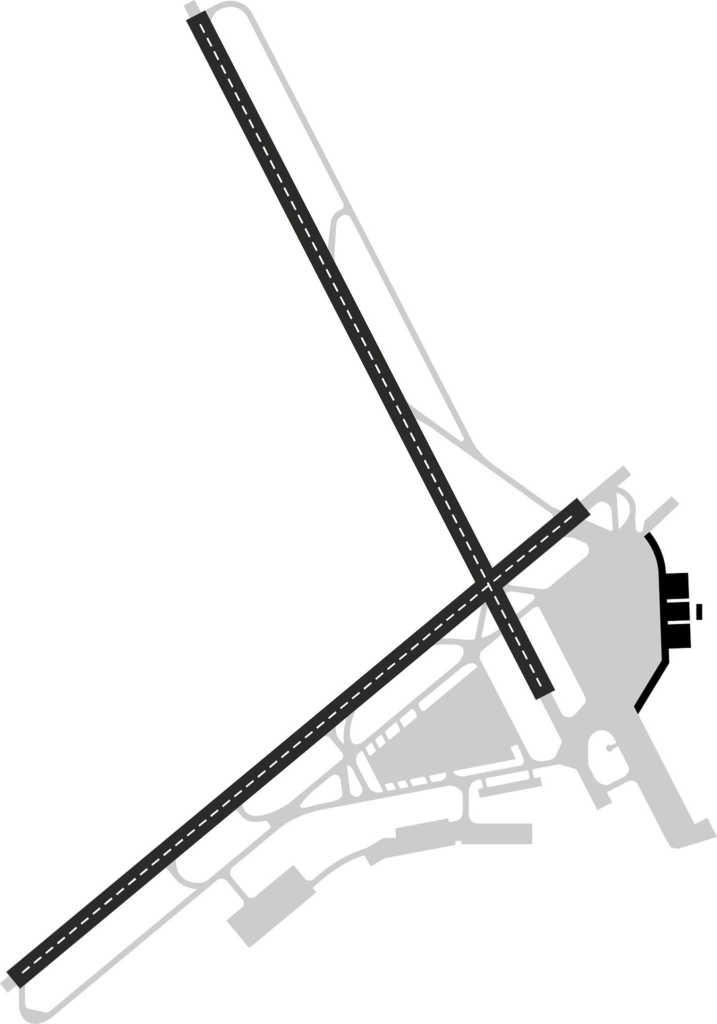
Driven by severe crosswinds and heavy rain from Typhoon Xangsane, the flight crew’s visibility was drastically reduced. They were under intense pressure to depart before the storm deteriorated conditions beyond legal limits.
2. The Automation Conflict: PVD and ND Overlooked
The NTSB’s analysis of the Cockpit Voice Recorder (CVR) and Flight Data Recorder (FDR) revealed that the Boeing 747’s advanced avionics provided the crew with multiple automated warnings that they were on the wrong runway. However, due to confirmation bias and task saturation, these alerts were fatally mismanaged.
Case A: The Para-Visual Director (PVD) Disagreement
The Boeing 747-400 features a specialized low-visibility takeoff aid called the Para-Visual Director (PVD).
- How it works: When the aircraft is correctly aligned with the localizer (the automated runway centerline beam programmed into the flight computer), the PVD display opens its shutters to reveal a black-and-white striped indicator that helps pilots track the center in heavy fog or rain.
- The Failure in Management: The crew had programmed the flight management computer for Runway 05L. When they lined up on Runway 05R, the aircraft was completely out of alignment with the 05L localizer signal. Consequently, the PVD shutters remained closed.
- The CVR Transcript: The co-pilot noticed this and verbally stated, “PVD hasn’t lined up.” Yet, instead of stopping to investigate why the critical automation disagreed with their physical location, the Captain dismissed it, responding that they could see the runway visually, and continued the takeoff roll.
Case B: The Navigation Display (ND) Electronic Map
The Boeing 747’s Navigation Display (ND) provides a highly accurate, moving-map visualization of the airport, superimposing the aircraft’s current GPS/Inertial reference position over the programmed runway.
- What it showed: Had the crew cross-checked the ND, they would have seen the green aircraft symbol physically positioned on the right-hand runway (05R), while the automated flight path vector line extended from the left-hand runway (05L).
- The Failure in Management: The crew was looking almost exclusively outside into the blinding rain to find centerline lights, failing to cross-check their primary internal electronic maps which clearly indicated a fatal positioning error.
3. The Climax: Blinding Rain and the Hidden Barrier
Tragically, the physical environment fed into the crew’s confirmation bias.
Because Runway 05R was being used as a taxiway, its green taxiway centerline lights were illuminated. In the driving rain, the crew mistook these green lights for the actual runway lights of 05L. They turned too early, lining up perfectly with a runway littered with construction hazards.
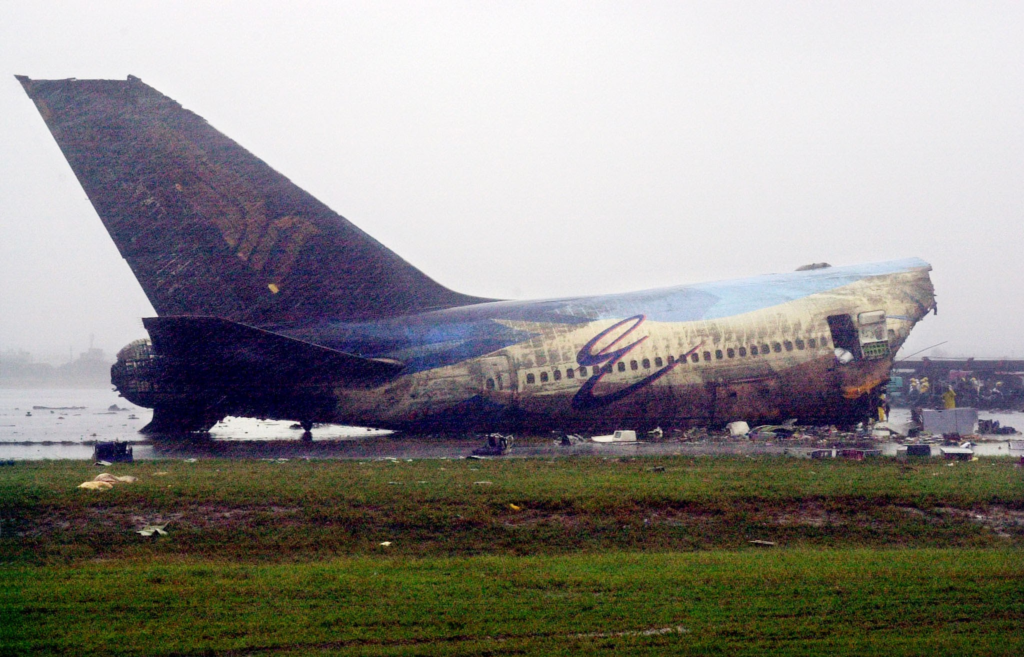
Forty-one seconds into the takeoff roll, moving at a catastrophic speed of over 130 knots, the Boeing 747 slammed into massive concrete blocks and heavy excavators. The aircraft tore apart into three sections, bursting into a massive fireball.
4. The NTSB vs. ASC Controversy: Systemic Failures
The final accident report sparked a famous debate between the Taiwanese Aviation Safety Council (ASC) and the American NTSB. While the ASC laid the primary blame directly on the pilots’ poor airmanship, the NTSB issued a formal dissent demanding equal emphasis on the airport’s systemic failures.
The NTSB argued that the airport had created a “trap” for the automated cockpit through severe infrastructure deficiencies:
| Deficient Infrastructure Element | NTSB Investigation Finding |
| Runway 05R Markings | The airport failed to place a giant “X” or barricades at the entrance of the closed runway to visually alert crews. |
| Lighting Configuration | The green taxiway centerline lights led the pilots directly into 05R, while the lack of high-intensity operational lights on 05L failed to grab the crew’s attention. |
| Ground Radar (ASDE) | The airport lacked Ground Radar (Airport Surface Detection Equipment), preventing air traffic controllers from seeing that the aircraft had made a wrong turn in the storm. |
Key Takeaway: Automation is Only as Safe as the Cross-Check
The NTSB’s investigation into Singapore Airlines Flight 006 serves as a foundational case study in Crew Resource Management (CRM) and automation safety.
It proved that when a crew is stressed and hyper-focused on an external task, they develop a psychological blind spot to internal electronic warnings. For automation management to be successful, pilots must adhere to a strict rule: If the cockpit displays do not match your physical reality, stop the aircraft immediately.
Leave a Reply