

Managing
External Pressure as a Pilot: The Core of Safe Flight
Decision-Making [PHAK 2-h]
Every moment in aviation operations, pilots make complex decisions. They must comprehensively evaluate countless factors—their own capabilities, health status, aircraft performance, weather conditions, and more. Among these, external pressure—the expectation to meet schedules, demands from others, time pressure within the organization—is one of the most powerful factors that can cloud a pilot’s judgment.
This article explores the mechanisms by which external pressure threatens aviation safety, and how pilots can recognize and systematically manage it.
Why External Pressure Threatens Safety
External pressure felt by pilots is a psychological compulsion: “I must be there.” Requests from superiors, important meetings, passenger expectations—all of these push toward continuing the flight.
Concrete examples of external pressure:
- Meeting schedules: Ignoring bad weather to depart for a urgent
business meeting - Passenger expectations: The demand to “arrive on time” impairs the
pilot’s judgment - Supervisor directives: Requesting long-distance flights while
fatigued

In such situations, pilots easily fall victim to get-there-itis—a psychological phenomenon where the compulsion to reach the destination leads to dangerous decisions.
Looking at real cases, there was an instance where a supervisor requested an urgent flight to a city 750 miles away. The pilot had slept only four hours the night before, and the weather forecast was unfavorable. Objectively, it was not an appropriate situation to fly. When the pilot declined the flight, the supervisor was displeased, but after the dangers were explained, he eventually understood.
This case carries an important lesson. The courage to say “I cannot fly now” in the face of external pressure is the first line of defense for safety.
The Difference Between Internal and External Pressure
Two types of pressure threaten aviation safety.
External pressure: – Schedule demands, supervisor directives, passenger expectations—originating from others or circumstances – Applied forcefully from outside the pilot
Internal pressure: – A psychological state of overconfidence in one’s abilities – Risks that experienced pilots tend to underestimate – Originating from the pilot’s own mind
This distinction matters because the two types require different coping strategies. External pressure requires clear communication and advance planning, while internal pressure requires self-examination and cold self-assessment.
Pilot Self-Assessment: The IMSAFE Checklist
Before flying, pilots must objectively diagnose their current condition. The IMSAFE checklist is the tool for this.
IMSAFE items:
- I (Illness): Disease condition—are there no colds
or infections? - M (Medication): Medication use—are there no drugs
causing drowsiness or impairing judgment? - S (Stress): Stress—is personal worry or work stress
not excessive? - A (Alcohol): Alcohol—is there no recent drinking
history? - F (Fatigue): Fatigue—has adequate sleep been
obtained? - E (Emotion): Emotion—do fear, anger, or low mood
not affect flying?
If any item on this checklist is assessed as “dangerous condition,” it is wise to postpone the flight or choose alternative transportation.
Risk Assessment Tool: The PAVE Checklist
Pilots must assess not only external pressure but also the overall context of the flight. The PAVE checklist structures this evaluation.
The four elements of PAVE:
- P (Pilot): Pilot—what are capabilities, fatigue
level, and proficiency? - A (Aircraft): Aircraft—what are maintenance status,
fuel, and performance limitations? - V (enVironment): Environment—what are weather,
airspace, and terrain conditions? - E (External Pressure): External pressure—are there
schedule demands, expectations, or threats of financial loss?
If any of the four elements is assessed as “too risky to fly,” stopping or postponing the flight is the correct decision. External pressure tends to cause pilots to ignore other risk factors, so it requires special attention in evaluation.
Practical Strategies for Managing External Pressure
Step 1: Managing expectations in advance
Communicate in advance that the flight may not arrive on time.
- Clearly inform passengers and stakeholders that “the estimated time
is this, but delays are possible” - If any passengers must arrive by a specific time, recommend
commercial airlines or alternative transportation
This prevents external pressure from arising in the first place—the pressure to “arrive by this time at all costs.”
Step 2: Building in sufficient time
Include slack in your flight schedule.
- Margin to change course if unexpected weather deteriorates
- Fuel and time to divert to alternate landing sites
- Time to reach the destination via alternative transportation if
delays occur
The tighter the schedule, the stronger the external pressure becomes.
Step 3: Preparing contingency plans in advance
For important flights, work out Plan B beforehand.
- Reserve backup flights or book car/train alternatives
- Develop contingency options for various delay scenarios
- If needed, consider departing a day early or arriving the next
day
When you prepare for “worst case,” psychological relief follows, and judgment becomes clearer when actually making flight decisions.
Step 4: Securing a delay notification system
Establish a method to promptly inform those waiting at the destination.
- Prepare a contact list
- Know the procedures for immediate notification if delays occur
- Reduce uncertainty with clear messaging
Notifying people early minimizes dissatisfaction better than unexpected announcements.
Step 5: Relieving return-home pressure
Even short same-day round trips can be delayed.
- Always carry emergency supplies—medications, contact lens solution,
toiletries - Prepare a change of clothes or two
- Always leave the possibility of staying overnight open
When there’s no anxiety about “what if I need to stay overnight,” decision-making becomes much clearer.
Decision-Making Principles for Facing External Pressure
Accepting delays
Whether in aviation or driving, delays are commonplace. Struggling to control them becomes the cause of accidents.
The pilot’s role is to avoid creating new risks. Never sacrifice safety to meet a schedule.
Courageous “refusal”
Supervisor directives, passenger expectations, threats of financial loss—all of these push toward “you must fly.” But the courage to say “I cannot fly now” is the highest safety practice.
Initially, the other party may be displeased. But when you clearly explain the dangers, reasonable people understand.
Relying on checklists
IMSAFE and PAVE are objective assessment tools free of emotion. When judgment becomes clouded, return to these checklists. Specific checklist items, not “feelings,” must become the basis for decision-making.
Conclusion: The Beginning of a Safe Flying Culture
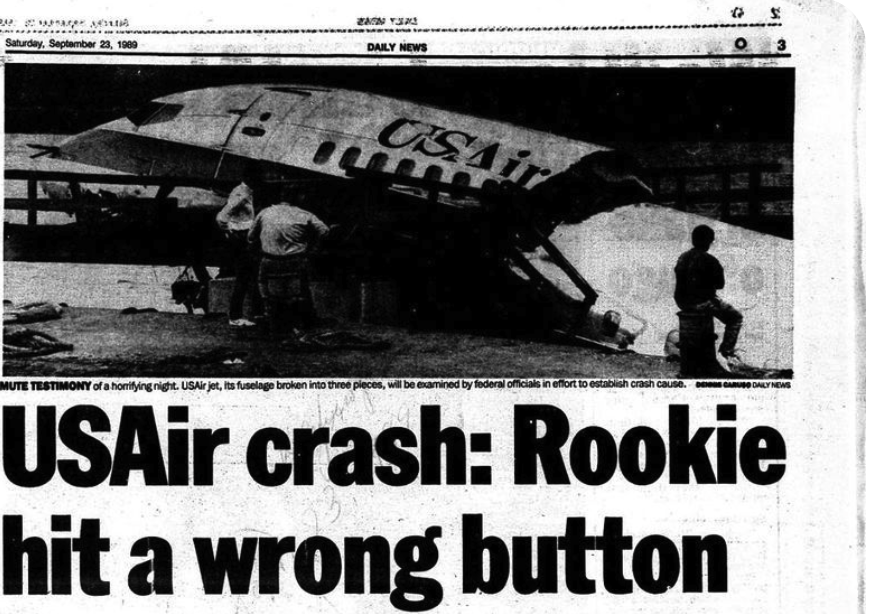
External pressure is aviation safety’s greatest enemy. Schedules, expectations, threats of financial loss—all of these drive pilots toward wrong decisions.
But external pressure is predictable and can be managed systematically. By managing expectations in advance, securing sufficient time, preparing contingency plans, and objectively assessing your condition, flight safety increases significantly.
Most importantly, it is the courage to decide “I cannot fly now.” That courage is the foundation of all flight, and the beginning of an aviation safety culture.
Leave a Reply