

Flying
Solo, Making Safe Decisions: The Complete Guide to Single-Pilot Resource [PHAK 2-j]
Management
How can a single pilot safely assess and manage the complex situations that arise when operating an aircraft? Single-Pilot Resource Management (SRM) isn’t just a checklist—it’s a decision-making framework that every solo pilot must master. It goes beyond the technical skills of flying, addressing how to systematically recognize and evaluate unpredictable variables that no amount of stick-and-rudder technique can handle: deteriorating weather, engine issues, fuel reserves.
Why Technique Alone Isn’t Enough
Pilot training devotes extensive hours to operational skills: steep turns, instrument flying, emergency procedures. The core of training is repetition—drilling the same procedures until they become second nature.
But real flying presents far more variety than any training scenario.
- When do you cancel a flight as weather worsens?
- Does that strange engine noise warrant an emergency landing?
- Are your current fuel reserves safe?
These questions have no textbook answer. They require pilots to integrate their experience, abilities, and physical and mental state into a responsible judgment call.
ADM and SRM: The Two Pillars of Aeronautical Decision-Making
Aeronautical Decision-Making (ADM) is a structured methodology for this judgment process. Rather than relying solely on experience and intuition, it’s a systematic approach to identifying and evaluating risk, then selecting the best course of action.
The core elements of ADM:
- The DECIDE Model: A six-step decision procedure
where you Define the problem, Examine the cause, Choose alternatives,
Identify the best choice, Do the action, and Evaluate the results - Identifying Five Hazardous Attitudes: Macho
(overconfidence), Impulsivity (rushing to act), Invulnerability
(believing nothing bad can happen), Resignation (giving up on
responsibility), and Anti-authority (resisting rules) - The IMSAFE Self-Assessment: Checking for Illness,
Medication effects, Stress, Alcohol, Fatigue, and Emotion
Single-Pilot Resource Management (SRM) applies ADM to the practical demands of aircraft operation. While Crew Resource Management (CRM) emphasizes coordination and communication among multiple crew members, SRM addresses how one pilot can manage every aspect of an aircraft while maintaining a safety margin.
The Five Ps: Your SRM Action Checklist
To implement SRM during actual flight, aviators developed the Five Ps Check. This systematic approach examines five key areas at critical points in the flight.
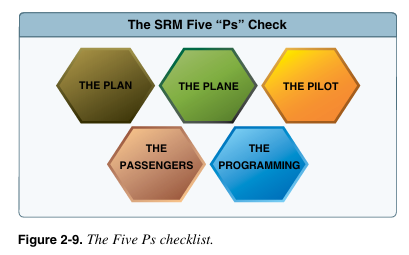
1. The Plan
Before takeoff, you established a flight plan. Now verify it still makes sense.
- Are the weather briefings for departure and destination still
valid? - What’s the runway condition and available facilities at your
destination? - Are your alternate airports and diversion points adequately
positioned? - Do you have all required charts, NOTAMs, and flight
information?
Planning doesn’t end on the ground. During flight, periodically compare your original plan against current conditions to determine if changes are needed.
2. The Plane
No aircraft is perfect. Even after the preflight inspection, unexpected problems can emerge during flight.
- Are engine performance and instrument indications within normal
limits? - Is fuel consumption matching your expectations?
- Are there any unusual vibrations or sounds from the airframe?
- Are the avionics operating as they should?
Make it a habit to recheck aircraft status at each phase of flight—before engine start, before takeoff, during cruise, and before descent.
3. The Pilot
Honestly evaluate your own physical and mental state. This is the most difficult—yet most critical—part of Single-Pilot Resource Management.
Use the IMSAFE checklist to assess yourself:
- Illness: Do you have any cold, infection, or
chronic condition? - Medication: Could any pills you’re taking impair
your flying ability? - Stress: Is personal or professional stress clouding
your judgment? - Alcohol: Have you sufficiently recovered from last
night’s drinking? - Fatigue: Have you had enough sleep and rest?
- Emotion: Are fear, overconfidence, or despair
distorting your decisions?
Also evaluate whether you have the skills and experience this flight requires, and whether you’re prepared for special situations like night flying or instrument meteorological conditions (IMC).
4. The Passengers
If you’re carrying passengers, their condition affects flight safety.
- Is anyone aboard at risk of a medical emergency?
- Does anyone need special assistance during the flight?
- Could passenger anxiety or behavior distract you from flying?
Passenger safety and comfort are significant variables in your decision-making.
5. The Programming
Modern aircraft have complex autopilot systems, navigation equipment, and avionics. Verify they’re configured correctly and operating as intended.
- Are your navigation systems (GPS, VOR, ILS) properly selected and
set? - Is the autopilot configured for current conditions?
- Are communication frequencies correctly set?
- Are safety systems—altitude alerters, GPWS, TCAS—activated?
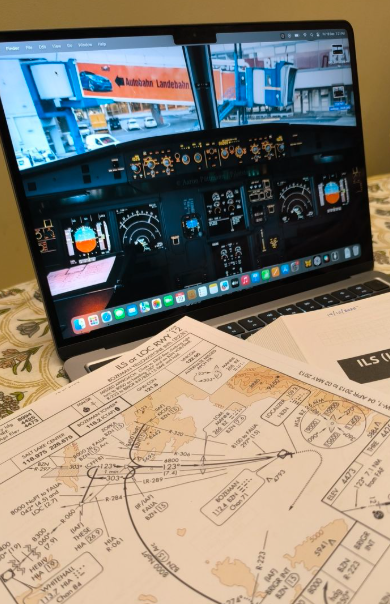
Misconfiguration can create emergencies, so pay special attention here.
Situational Awareness and Staying Alert in Flight
Another core element of SRM is Situational Awareness (SA)—accurately knowing your aircraft’s position, speed, altitude, surroundings, and weather, and anticipating how conditions will evolve.
Losing SA is dangerous.
- Get-there-itis: Fixating on reaching your destination while ignoring
deteriorating weather - Over-reliance on autopilot: Missing changes in aircraft performance
because you’re not hand-flying - Tunnel vision on radio communications: Neglecting control inputs
while focused on talking to ATC
Throughout every flight, actively monitor your environment and stay ready for unexpected changes.
The Golden Hours of Decision-Making: Decision Points
Not all moments in a flight carry equal weight. Certain decisions have far greater consequences.
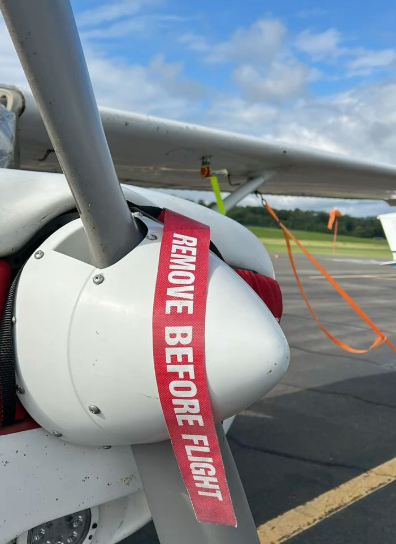
Preflight: Your Best Opportunity
The easiest time to cancel a flight is before anyone boards the aircraft.
- All information is in your hands
- You have time to arrange alternative transportation
- The FBO can assist you immediately
A thorough preflight review leading to a confident “No-Go” call protects everyone.
Pretakeoff: Final Verification
There are almost no emergencies that require you to take off. After starting engines and completing the pretakeoff checklist, review the Five Ps one more time. This is when you make your final “Go” or “No-Go” decision.
Even if you decide “Go,” you can set limits for yourself:
- If weather deteriorates past a certain point, divert to an
alternate - Don’t climb above a specified altitude
- Land by a specific time
Midpoint: Time to Reassess
Many pilots skip weather updates until they’re approaching the destination and receiving ATIS. By then, your good alternate airports are already behind you.
At the midpoint of your flight—especially at the halfway mark—reassess your situation:
- Has weather deviated from what you expected?
- Are alternates still within reach?
- Is your fuel reserve still adequate?
- Has anything changed with the aircraft?
You must be ready to make another “Go” or “No-Go” decision at this point.
Additional Decision Points
- Before Descent: A final assessment before
approaching your destination - Before Final Approach: Your last check for VFR
flights before landing
How SRM Differs from Traditional Risk Management
Conventional risk management has been largely reactive—pilots respond only after something goes wrong.
Many airline pilots assign numerical values to risk factors through checklists, and if the total exceeds a threshold, they cancel or modify the flight. This approach is useful during training, but real flying’s dynamic nature makes it hard to apply predetermined numbers to changing conditions.
SRM takes a fundamentally different approach:
- Proactive Prevention: Don’t wait for problems to
develop; check at critical flight phases before they do - Structured Review: At set points—preflight,
pretakeoff, midpoint, predescent—systematically review the Five Ps - Pilot Initiative: Don’t rely only on checklists;
actively exercise your judgment
This distinction lies at the heart of modern aviation safety culture.

Flying Solo, Deciding Responsibly
Single-Pilot Resource Management isn’t just a checklist. It’s a commitment to manage every aspect of your aircraft while maintaining safety, and the courage to stop and reconsider when you need to.
Regularly checking five areas—flight plan, aircraft status, your own condition, passenger safety, and system configuration—and making clear decisions at critical points. This is what it takes to fly safely and alone.
Leave a Reply