

The History of Aeronautical Decision-Making (ADM): The Evolution of Human Factors for Safe Flight
Safety has always been the paramount value in the aviation industry. Amidst countless technological advancements, one factor remains consistently crucial for flight safety: the human element, and the Aeronautical Decision-Making (ADM) that manages it. The history of Aeronautical Decision-Making (ADM) illustrates the continuous effort to understand and minimize the root causes of aviation accidents.
The Dawn of ADM: Human Factors and the Beginning of Flight Safety
For over 40 years, pilots’ exceptional judgment, known as Aeronautical Decision-Making (ADM), has been recognized as a critical factor in safe aircraft operation and accident prevention. The aviation industry, in particular, felt an urgent need to reduce accidents caused by human factors. This awareness led to the development of the first training programs focused on improving ADM.
The Emergence of Crew Resource Management (CRM) and the Importance of Collaboration
At the core of early efforts was Crew Resource Management (CRM) training. CRM focuses on enabling flight crews to effectively utilize all available resources. This includes human resources, hardware, and information that aids in Aeronautical Decision-Making (ADM).
- Human Resources: Emphasizes the cooperation of all
crew members, including pilots, co-pilots, and cabin crew. - Hardware: Covers how to properly use aircraft
systems and equipment. - Information: Develops the ability to analyze and
share various data necessary for flight.
The ultimate goal of CRM is to foster cooperation among crew members and enhance decision-making skills, leading to excellent ADM. This effort aimed to elevate overall safety levels not only through individual pilot capability but also through teamwork.
The FAA’s Role: Institutionalizing ADM Training and Core Models
As research and experience accumulated in the aviation industry, the U.S. Federal Aviation Administration (FAA) also turned its attention to this field. The FAA developed training programs to improve pilots’ decision-making abilities. This led to FAA regulations that now mandate decision-making training as an essential part of pilot training curricula.
1987, A Turning Point for ADM Manuals and Key Methodologies
Research, development, and testing on Aeronautical Decision-Making (ADM) culminated significantly in 1987. Six manuals, designed to meet the decision-making demands of various pilot ratings, were published. These manuals provided diverse resources aimed at reducing decision-related accidents.
Specifically, the following core methodologies were introduced at this time, laying the groundwork for ADM training:
- DECIDE Model: A framework to aid systematic
decision-making in flight situations. (Detect, Estimate, Choose,
Identify, Do, Evaluate) - Risk Management Framework: Guides the process of
identifying, assessing, and mitigating potential risks. - Hazardous Attitudes: Defines five psychological
attitudes (Anti-authority, Impulsivity, Invulnerability, Macho,
Resignation) that can negatively impact pilot safety and teaches methods
to overcome them.
The effectiveness of these materials was verified through independent studies. Student pilots who received ADM training alongside standard flight instruction were found to make fewer in-flight errors compared to those who did not. This clearly demonstrated that ADM training positively influences pilot performance and safety in real-world flight environments.
Human Factors: The Primary Cause of Aviation Accidents
Flight safety technology continues to advance, and pilot training methods are continuously improving. Nevertheless, aviation accidents still occur. One of the main reasons is none other than human factors. It is estimated that approximately 80% of all aviation accidents are related to human factors.
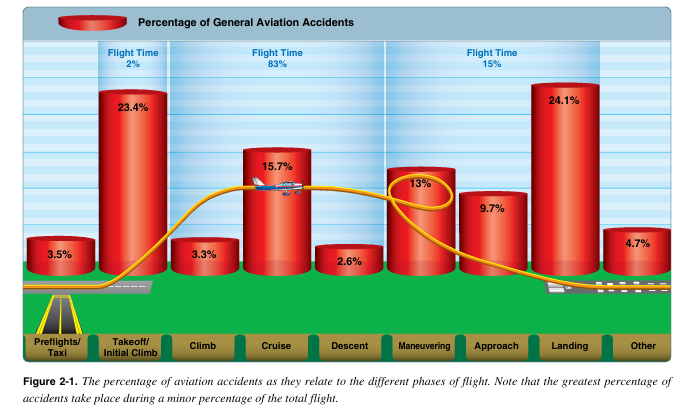
Characteristics of Accidents by Flight Phase
Accidents related to human factors occur significantly during the landing and takeoff phases of flight. Although these phases constitute a small portion of the total flight time, the high accident rate during these two critical stages is highly significant. This implies that pilots’ decision-making abilities are particularly crucial during these moments.
- Landing: A phase requiring complex environmental
considerations, precise maneuvers, and instantaneous judgment. - Takeoff: The initial climb phase where managing
aircraft performance and handling emergency situations are
critical.
Aeronautical Decision-Making (ADM) is an approach that systematically evaluates these risks and manages stress. Understanding ADM means recognizing how personal attitudes influence decision-making and knowing how to modify those attitudes to enhance safety in the flight environment.

The Modern Significance and Enduring Importance of ADM
Aeronautical Decision-Making (ADM) focuses on understanding the factors that drive human decisions and how the decision-making process works and can be improved. Its ultimate goal is to enhance pilots’ skills needed to mitigate flight-related risks. The U.S. Federal Aviation Administration’s (FAA) Advisory Circular (AC) 60-22, “Aeronautical Decision-Making,” provides background material, definitions, and other relevant information on ADM training in the general aviation environment.
Aeronautical Decision-Making (ADM) goes beyond mere operational skills. It is a comprehensive mental discipline that helps pilots identify risks, make sound judgments, and respond calmly even in stressful situations. It showcases the continuous evolution of aviation safety, which has recognized the importance of human factors alongside technological advancements and developed systematic training and education to address them. Through the lessons of the past, we reaffirm the importance of ADM in creating a safer sky for the future.
Leave a Reply